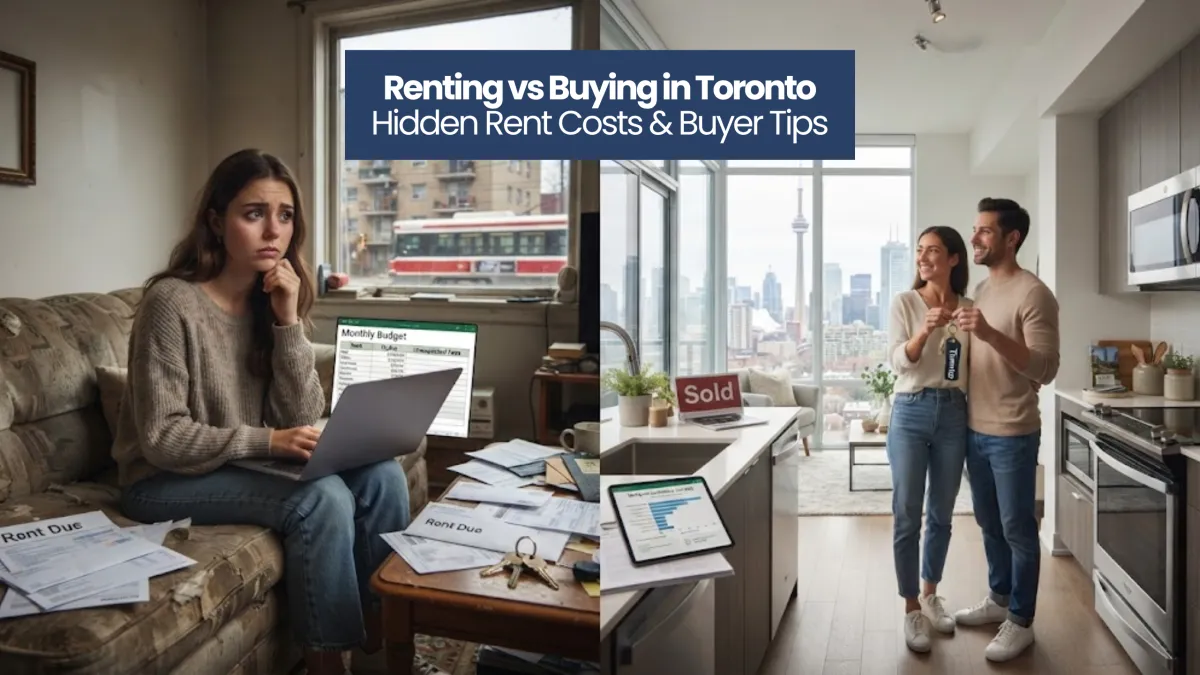
Renting vs Buying in Toronto: Hidden Rent Costs & Buyer Tips
Renting might seem cheaper than buying a home, especially in a city like Toronto. But is it really? When you take a closer look, you’ll see that renting might be costing you more than you think. In this blog, we’ll explore some hidden costs of renting and provide insider tips for first-time home buyers.
Monthly Rent Payments
The first and most obvious cost of renting is the monthly rent itself. Rent in Toronto can be very high, even for small apartments. You might think you’re just paying for a place to live, but renting can cost you in other ways, too.
Missing Out on Equity
When you rent, your money goes to the landlord. When you own a home, your mortgage payments help you build equity. Equity is like a savings account that grows over time. When you sell your home, you can get back this money, often with extra if your home’s value has increased.
Rent Increases
Landlords can increase your rent every year. This means what you pay now might look very different in just a few years. With a fixed-rate mortgage, your payments stay stable, making budgeting easier and more predictable.
Valuable Government Homebuyer Programs
While primary homeowners in Canada cannot deduct mortgage interest or property taxes from their income taxes, the government offers incredible tax-advantaged programs for buyers. Utilizing tools like the First Home Savings Account (FHSA) and the Home Buyers' Plan (HBP) lets you save thousands of dollars pre-tax to put toward your purchase.
Maintenance and Repairs
While renters don’t pay directly for unexpected maintenance, those costs are built into your monthly rent. As a homeowner, you are responsible for your own repairs—meaning you control the upgrades, but you also need to budget carefully for emergency fixes like a new roof or furnace.
Lack of Stability
Renting can mean moving frequently due to landlord decisions or rising costs. Each move comes with hidden expenses like hiring movers, buying packing supplies, and sometimes even losing work days. Owning a home provides long-term stability and roots you in a community.
Opportunity Costs
Finally, renting means you’re not investing in a growing asset. The money spent on rent could instead be building net worth through homeownership, setting you up much better for long-term financial security.
From Pre-Approval to Closing: 5 Insider Tips for First-Time Home Buyers
Tip 1: Get Pre-Approved for a Mortgage
Before you start house hunting, get pre-approved for a mortgage. This means a lender looks at your finances and tells you how much money they can lend you. Knowing your budget can help you focus on homes you can afford, saving you time and effort.
Tip 2: Work with a Real Estate Agent
A real estate agent knows the market and can help you find a home that fits your budget and needs. They can also help you navigate the buying process, negotiate with sellers, and handle complex paperwork.
Tip 3: Consider All Costs
When budgeting for a home, think beyond the purchase price. You’ll need to account for land transfer taxes (especially relevant in Toronto!), property taxes, home insurance, maintenance, and utilities. Always keep an emergency fund for unexpected home repairs.
Tip 4: Don’t Skip the Home Inspection
A home inspection might seem like an extra cost, but it is essential. A home inspector looks for hidden structural, plumbing, or electrical problems. Knowing about these issues before buying can help you negotiate repairs or avoid a costly mistake.
Tip 5: Take Your Time
Buying a home is a major financial milestone, so don’t rush it. Take your time to find a property that fits your long-term needs and budget. It’s always better to wait for the right home than to rush and regret it later.
Conclusion
Renting might seem like the easier or cheaper option initially, but it comes with long-term financial trade-offs. By understanding these costs and utilizing programs like the FHSA, you can be better prepared to buy your first home in Toronto. Building equity, securing your housing costs, and investing in your future are major advantages of owning property. Take the time to understand your options and make the best decision for your financial future.