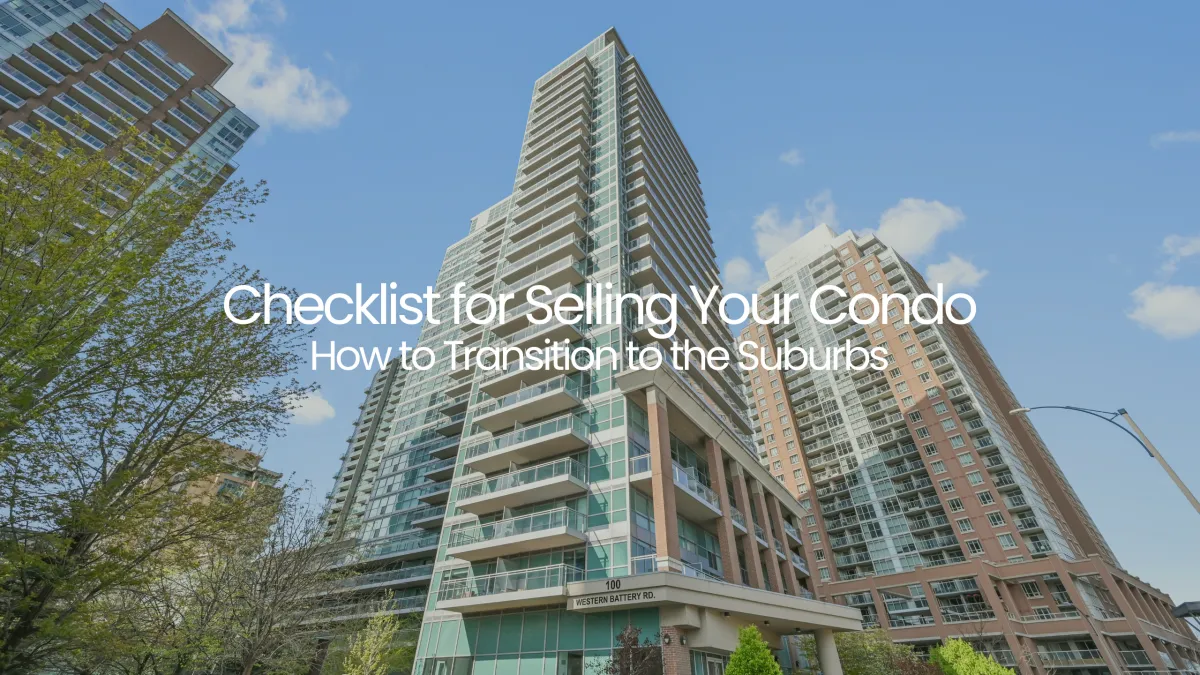
Checklist for Selling Your Condo: How to Transition to the Suburbs
Selling a condo can be an exciting journey, but it often comes with its own set of challenges. If you’re considering moving from your cozy Toronto condo to a spacious house in the suburbs, this guide is just for you. Here, we'll walk through everything you need to know before listing your condo for sale, focusing on actionable steps and common mistakes to avoid.
1. Preparing Your Condo for Sale
Declutter and Depersonalize
Before listing your condo, it's crucial to declutter and depersonalize. Remove personal items like family photos and personal collections. This helps potential buyers visualize themselves living in your space.
Example:
- Keep kitchen counters clear of gadgets and keep only essential items.
- Store away toys and other personal items in a neat storage box.
Deep Clean Every Corner
A spotless condo appeals to buyers. Consider hiring a professional cleaning service to ensure every nook and cranny is sparkling. Pay special attention to high-touch areas like light switches, door handles, and bathroom fixtures.
Make Minor Repairs
Fix any small issues such as leaky faucets, squeaky doors, or cracked tiles. These might seem minor, but they can leave a lasting impression on buyers.
2. Pricing Your Condo Right
Research Comparable Sales
Look at recent sales of similar condos in your neighborhood to get an idea of a fair price. Websites like Realtor.ca can be excellent resources for this.
Consider Market Conditions
Understand the current market conditions. Is it a buyer’s market or a seller’s market? This information can affect your pricing strategy.
Example:
- If it's a seller's market with limited inventory, you can price your condo slightly higher.
- In a buyer's market, pricing competitively can make your listing stand out.
3. Enhancing Your Condo’s Appeal
Stage Your Condo
Staging involves arranging furniture and decor to highlight your condo’s best features. Professional staging services can often make a significant difference in how potential buyers perceive your space.
Invest in Photography
High-quality photographs are crucial. Hire a professional photographer who specializes in real estate to capture your condo in the best light.
Create a Virtual Tour
A virtual tour can give buyers a comprehensive view of your condo. This is especially important during times when physical showings might be challenging.
4. Approaching Legal and Financial Matters
Review Condo Rules and Regulations
Understand any rules and regulations in your condo building that might affect the sale. For example, some buildings have restrictions on signage or open houses.
Gather Necessary Documents
Prepare all necessary documents, including the condo declaration, bylaws, and recent financial statements. Potential buyers will likely request these during the transaction.
Know the Costs Involved
Selling a condo involves costs, such as legal fees, real estate agent commissions, and outstanding condo fees. Make sure you budget for these expenses.
5. Marketing Your Condo
Create a Compelling Listing Description
Write a detailed and engaging listing description that highlights the unique aspects of your condo. Focus on features like proximity to amenities, spacious layouts, and modern upgrades.
Example:
- "Enjoy breathtaking city views from your living room in this modern 2-bedroom condo, just steps away from Toronto’s best restaurants and parks."
Utilize Social Media
Share your listing on social media platforms like Facebook, Instagram, and LinkedIn. Consider making a short video tour to post on these platforms.
Host an Open House
Hosting an open house can attract numerous potential buyers. Ensure it is well-advertised and that your condo is in tip-top shape for the event.
6. Navigating Offers and Negotiations
Review Offers Carefully
When offers start coming in, review them carefully, considering not just the price but also the terms and conditions.
Be Prepared to Negotiate
Negotiations are part of the process. Be flexible and willing to work with potential buyers to reach a mutually beneficial agreement.
Example:
- If a buyer offers slightly below your asking price but has no contingencies and a speedy closing date, it might be worth considering.
10 Common Mistakes to Avoid When Listing Your Condo for Sale
1. Overpricing
Setting the price too high can deter potential buyers. Price your condo based on research and current market trends.
2. Neglecting Curb Appeal
First impressions matter. Ensure the exterior of your condo building is well-maintained, including landscaping and common areas.
3. Ignoring Minor Repairs
Overlooking small repairs can suggest to buyers that the property has been poorly maintained.
4. Poor Quality Photos
Low-quality photos can turn off buyers before they even see your condo. Invest in professional photography.
5. Not Staging
An empty or cluttered condo can be hard for buyers to visualize as their future home. Consider professional staging.
6. Being Unavailable for Showings
Limitations on showing times can frustrate potential buyers. Be as flexible as possible with viewing schedules.
7. Inadequate Marketing
Relying solely on traditional methods might not be enough. Leverage online platforms and social media for broader reach.
8. Not Disclosing Issues
Transparency is crucial. If there are known issues with the condo, disclose them up front to avoid complications later.
9. Being Unprepared for Negotiations
Not being ready to negotiate can lead you to miss out on good offers. Be open to discussions and counter-offers.
10. Skipping Professional Advice
From real estate agents to legal advisors, professional guidance can make a significant difference in your selling process.
Selling a condo in Toronto and moving to the suburbs can be a smooth and rewarding experience with the right preparations and strategies. By following this comprehensive checklist, you’re well on your way to making your next big move a success. Happy selling!