
Moving to Bridgeland-Riverside: 2026 Calgary Neighborhood Guide
Historically known as Calgary’s "Little Italy," Bridgeland-Riverside has evolved into a modern urban village that manages to feel distinct from the downtown core while sitting directly on its doorstep. For those considering a move to the area in 2026, the neighborhood offers a specific blend of historic character, top-tier walkability, and a "main street" culture that is rare in a city as spread out as Calgary.
The Layout and Housing Mix
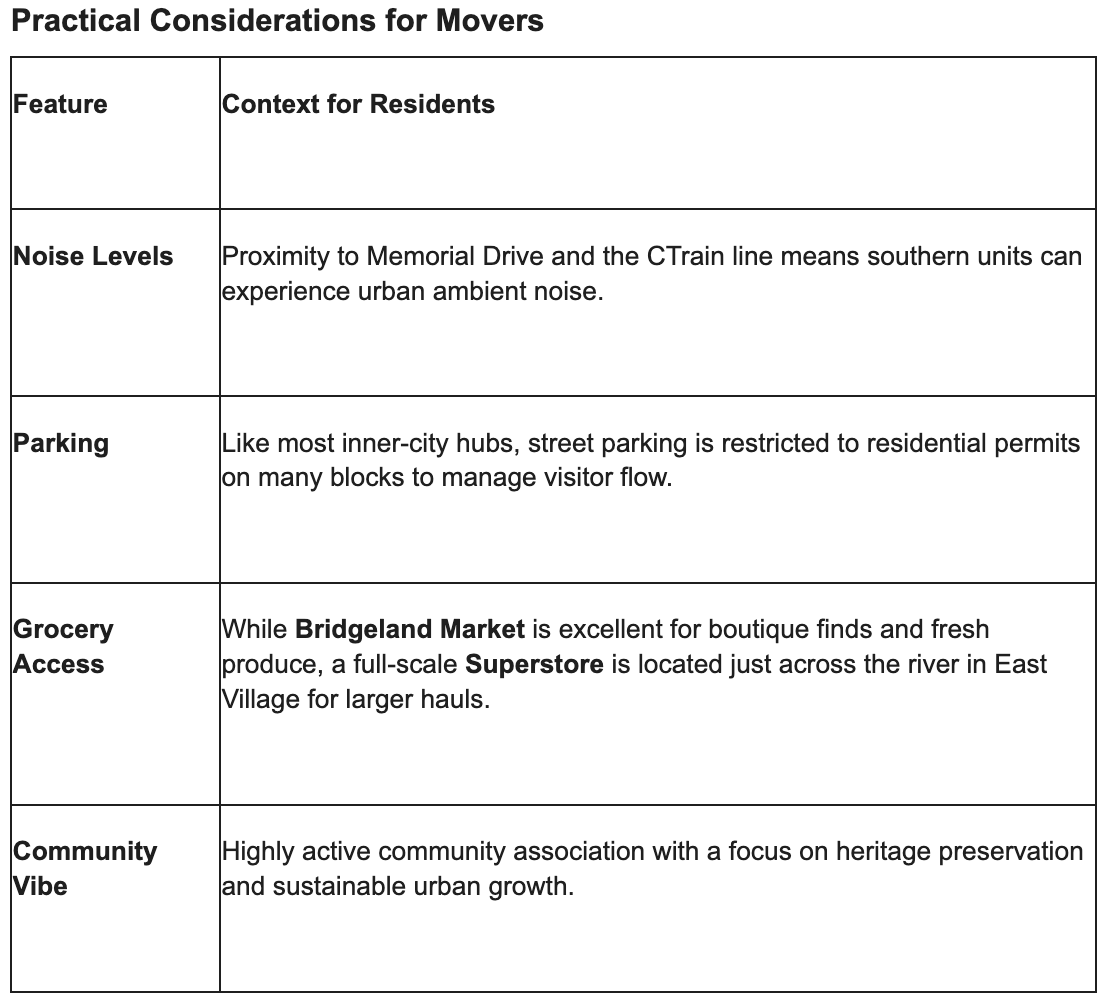
Bridgeland is characterized by its geography. To the south, it is bordered by Memorial Drive and the Bow River; to the north, it climbs a steep ridge that offers some of the city's best skyline views.
The Residential Profile: You will find a diverse architectural mix here. The "flats" (lower Bridgeland) are dominated by mid-rise luxury condos and modern townhome developments. As you move up the hill toward the ridge, the inventory shifts to a blend of original 1940s bungalows and contemporary detached infills.
Current State of the Market: In 2026, Bridgeland remains a high-demand pocket. While it commands a premium compared to the deep suburbs, it offers a more stable investment than many newer communities due to its finite boundaries and established infrastructure.
Daily Life and Amenities
Bridgeland functions as a "15-minute neighborhood," where most daily needs can be met without a vehicle.
1st Avenue NE: This is the community’s social and commercial spine. Following the city’s recent streetscape completion, the avenue is highly pedestrian-friendly. It is home to local staples like Lukes Drug Mart, Bridgeland Market, and a high concentration of Calgary’s top-rated independent restaurants (such as Shiki Menya and Blue Star Diner).
Green Space and Recreation: The neighborhood is anchored by Murdoch Park and the Bridgeland Riverside Community Association, which hosts a busy farmers' market and active soccer programs. Residents also have direct pedestrian bridge access to St. Patrick’s Island, a 31-hectare park with hiking trails and river access.
Connectivity and Commuting
For professionals working in the Downtown Core or the Beltline, the commute is one of the shortest in the city.
Transit: The Bridgeland-Memorial CTrain Station (Blue Line) provides direct access to downtown in under 5 minutes and to the University of Calgary/SAIT to the west.
Walking/Cycling: The neighborhood is a hub for the Bow River Pathway system. Many residents choose to commute by bike or on foot via the George C. King Bridge, which leads directly into the East Village.
Driving: Access to Deerfoot Trail and Stoney Trail is efficient via Memorial Drive, though traffic congestion on 1st Avenue can be a factor during peak school drop-off and pick-up hours.
Education and Healthcare
Schools: The area is served by Riverside School (a popular K-9 alternative program) and Langevin School, along with several nearby Catholic and public options in the surrounding communities of Renfrew and Crescent Heights.
Wellness: While the historic General Hospital is gone, the site has been repurposed into the Bridgeland Senior’s Health Centre and various private clinics, maintaining a strong healthcare presence in the community.
The Bottom Line
Bridgeland-Riverside is suited for those who prioritize lifestyle and proximity over square footage. It appeals to those who want an urban lifestyle that still feels like a "neighborhood" rather than a concrete canyon. In 2026, with the major infrastructure projects largely complete, the area offers a "settled" feel that continues to attract a mix of young professionals, downsizing retirees, and active families.